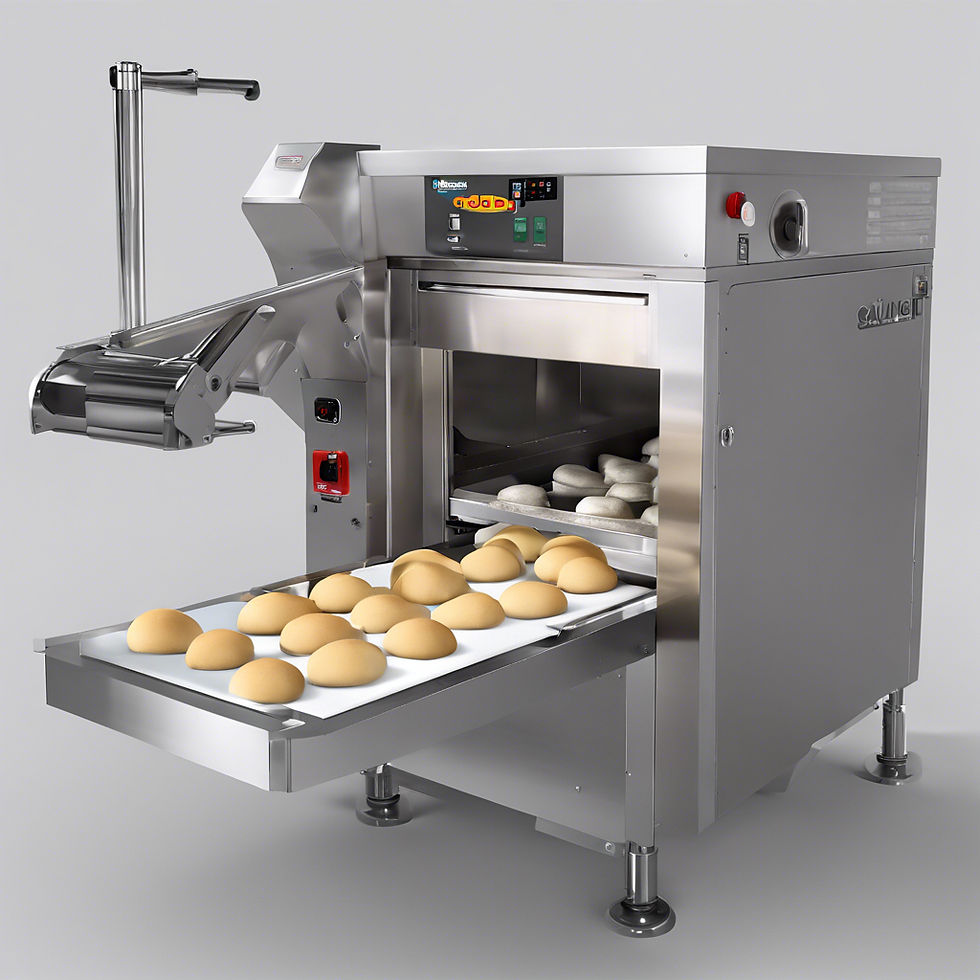
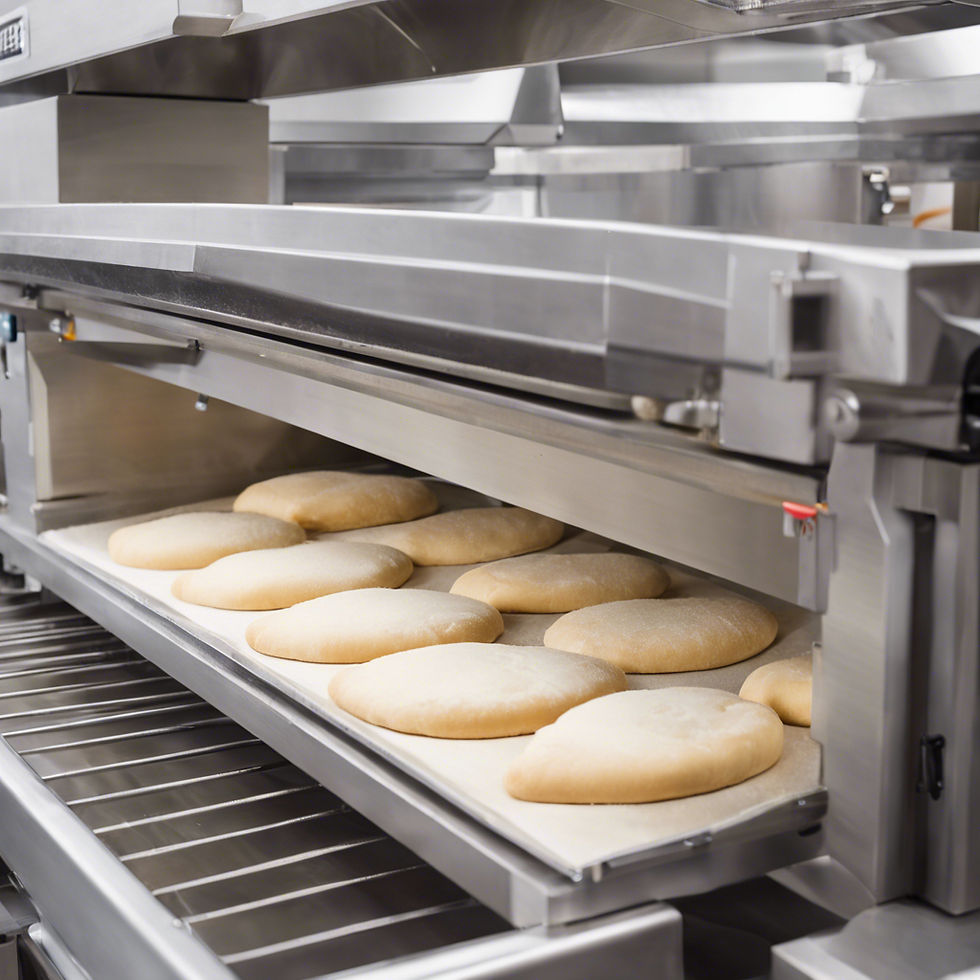
Volumetric Dough Divider: Accuracy, Capacity, Dough Range and Cost
Volumetric Dough Divider: Why the Right Configuration Matters

A volumetric dough divider can improve portioning consistency and reduce manual handling when its chamber, pressure system, portion range, and throughput match the dough. The purchase decision should start with representative dough tests, required piece weights, peak output, sanitation workflow, operator safety, and line balance, not a brochure speed alone.
But what exactly does a volumetric dough divider do? How much power does it consume? And how do you choose the right one based on price, output, and daily needs?
Let’s break it all down for you, from types to power consumption, and everything in between.

Portion Range, Dough Types, and Operating Principle
A volumetric dough divider portions dough by filling a chamber of controlled volume and discharging the piece. Actual weight consistency depends on dough density, temperature, fermentation state, hydration, gas retention, machine settings, and feed conditions, so each recipe needs a validated setup and routine weight checks.
Common Bakery Applications
Dividing dough for bread loaves, buns, pizza bases, and rolls
Suitable for production environments only when the validated portion range, dough compatibility, and safe operating rate match the real schedule.
Can support more consistent piece weights and appearance when dough condition, settings, calibration checks, and downstream handling remain controlled.
Machine Types and Bakery Use Cases
When selecting the right volumetric dough divider, understanding the specific type and its ideal application is essential for ensuring production efficiency, output quality, and long-term reliability. Below are the most common types found in commercial bakeries, along with practical guidance for use.
Standard Machine Configuration
This is the core model used in many small to medium-sized bakeries. It uses piston-driven volume control to portion dough based on the desired weight range.
Key Features:
Head count and pieces per cycle vary by model and configuration; confirm the exact machine data sheet.
Rated and usable output vary by model, piece weight, dough condition, feed method, stops, and downstream capacity. Request a full-load demonstration with your dough.
Portion range depends on the selected chamber or piston configuration and dough properties. Verify every required SKU with representative dough.
Electrical requirements are model- and market-specific. Match the exact nameplate for voltage, phase, frequency, connected load, protection, and grounding to a qualified site review.
Compact footprint, ideal for bakeries with space limitations
Use Cases:
Potential applications include toast, buns, sandwich bread, and pizza bases after dough-compatibility and portioning tests.
Suitable for repeat production only after weight variation, dough damage, sticking, and downstream quality meet the bakery’s acceptance criteria.
Ideal For: Bakery stores, cloud kitchens, and commissaries needing consistency and scale
Choose head count from validated pieces per cycle, cycle rate, planned uptime, sanitation stops, changeovers, and the slowest downstream machine.
Compare manual and automatic dough dividers
Computer-Controlled Machine Configuration
Computer-controlled models may add recipe storage, touchscreen adjustment, or servo-assisted functions, depending on the exact configuration. Ask the supplier to demonstrate the controls with your recipes and confirm what is standard versus optional.
Key Features:
Digital interface with programmable weight presets
Dough compatibility is not guaranteed by the control interface. Test high-hydration, fermented, enriched, or specialty doughs separately.
Do not accept a universal accuracy claim. Define the allowed weight tolerance, sampling method, dough condition, sample size, and test duration in the purchase specification.
Conveyors and line integration depend on mechanical height, discharge orientation, speed control, electrical interface, guarding, and emergency-stop design.
Use Cases:
Best suited for bakeries producing multiple product types with varied weights
Supports frequent recipe changes and process optimisation
Ideal For: Mid- to large-scale bakeries, central kitchens, industrial food producers
Recipe memory can reduce setup time, but operators should still confirm the correct program, dough condition, chamber setting, and sample weights at startup and after interruptions.
Pairing with a Conical Rounder
A conical rounder can receive divided pieces and shape them for selected products. Its suitability depends on piece range, dough condition, flouring or oiling method, track adjustment, line speed, and the product’s required surface tension.
Key Features:
Confirm the rounder’s validated piece range with the exact model and representative dough.
Match the rounder’s usable rate to the divider using a sustained line test, including normal stops and changeovers.
Verify the exact rounder nameplate, protection, phase, frequency, and installation requirements.
Spiral track design with adjustable rounding time
Ask the supplier to identify food-contact materials, cleanability, access points, and any model-specific sanitation documentation.
Use Cases:
Used for bread rolls, burger buns, steamed buns, and pizza dough
Rounding can support shape and surface development, but final fermentation and appearance still depend on dough condition, rest time, handling, and proofing control.
Ideal For: Any bakery with high bun or roll output; also suitable for Middle Eastern flatbreads and doughnut shaping
Pro Tip: Maintain proper flour dusting and clean the track daily to prevent dough buildup and machine wear.
Review automatic dough divider rounder practices
Line Balance from Dividing to Rounding
To maximise production efficiency and reduce labour costs, many commercial bakeries build modular dough processing lines by integrating the volumetric dough divider with complementary equipment. This strategy allows for continuous, automated production of high-volume dough products with minimal manual handling.
Here’s a typical full-line setup:
Step 1: Volumetric Dough Divider
Function: Divides bulk dough into equal-sized portions
Use the divider’s sustained tested rate for the selected dough and piece weight, not an unverified maximum.
Benefit: Ensures consistent dough weight and reduces human error
➡ Step 2: Conical Dough Rounder
Function: Rounds divided dough into tight, uniform balls
Use the rounder’s sustained tested rate for the same dough and piece range, including normal operating stops.
Benefit: Improves dough structure and final product appearance
Important: This step is essential for shaping rolls, buns, and pizza bases
⏳ Step 3: Intermediate Proofer (Optional)
Function: Allows dough to rest and ferment before shaping
Intermediate-proofer capacity depends on pocket count, dwell time, loading rate, and product; size it from the validated line rate.
Benefit: Relaxes gluten, improves extensibility for moulding
Optional: Skip for non-fermented products or fast lines
➡ Step 4: Dough Moulder / Sheeter
Function: Shapes dough into desired form (loaf, baguette, etc.)
Models: Horizontal moulder, baguette moulder, or sheeter
Benefit: Precise shaping, uniform output, reduced hand rolling
Step 5: Final Proofer + Oven
For bread loaves or yeast-raised products, proofing before baking is critical
Choose a rotary rack oven or deck oven based on product type and volume
Example line sequence for bread-roll production:
Volumetric Dough Divider
Conical Dough Rounder
Intermediate Proofer
Horizontal Dough Moulder
Rotary Rack Oven
Balance the line from sustained usable rates. The divider, rounder, proofer, moulder, oven, conveyors, and operators must handle the same planned flow with an allowance for normal downtime.
Pro Tip: For growing bakeries, start with the dough divider and rounder. As your business scales, you can add intermediate proofers and moulders later. Always ensure machine speeds match, an overloaded divider or a slow oven can disrupt the entire workflow.
Price, Landed Cost, and Supplier Scope
The cost of a volumetric dough divider depends heavily on the model type, production capacity, and level of automation. Here's a breakdown:
Manual-Control Price Factors
Request a current written quotation for the standard configuration; price varies by portion range, head count, materials, controls, utilities, included accessories, shipping terms, and service scope.
Details: These are basic piston-based machines, often single- or dual-head, designed for consistent dough portioning without electronic controls. Ideal for bakery stores and entry-level production lines.
Confirm usable output with the required doughs and piece weights during a witnessed test.
Best for: Toast, buns, pizza bases, where fixed portion sizes and repeatable batches are common
Touchscreen and Adjustable-Control Price Factors
Request a current written quotation for the computer-controlled configuration, with every standard and optional feature itemized.
Details: Includes digital control panel, programmable weight ranges, and recipe memory. Allows precise tuning for multiple dough types, adjustable pressure, and multi-language interface.
Confirm sustained output, weight variation, changeover time, and line integration in the supplier test.
Best for: Commercial bakeries or central kitchens producing varied products or needing frequent setting adjustments
High-End and Turnkey System Price Factors
For high-end or turnkey systems, compare scope, integration engineering, installation, commissioning, training, documentation, service response, and spare parts, not the headline price alone.
Do not infer certification or support from brand origin. Ask for model-specific, verifiable compliance documents, warranty terms, local voltage configuration, service coverage, and included commissioning.
Use Case: Large-scale industrial bakeries or global chains
A standard model may suit stable, narrow product ranges, while additional controls may help frequent changeovers. Choose only after representative tests and a total-landed-cost comparison.
Check commercial dough roller operating mistakes
Buying Decision and Quotation Checklist
The right dough divider is the model that meets the bakery’s validated portion tolerance, usable throughput, sanitation, safety, service, and total-cost requirements.
Still not sure which model suits your bakery’s needs?
Request a tailored quotation that identifies the exact model, included options, tested dough range, acceptance criteria, installation scope, warranty, training, and spare parts.
📲 Add us on WhatsApp/WeChat: +86 188 1945 9649 to request brochures, factory videos, and a custom quotation.
Guarding, Jam Clearing, Cleaning, and Energy Isolation
Operators should never reach into the hopper, discharge, chamber, drive area, or downstream transfer while equipment can move. Keep guards and interlocks functional, verify the emergency stop during commissioning and scheduled checks, and follow the manufacturer’s shutdown and lockout/tagout procedure before clearing jams, cleaning, changing parts, or servicing the machine. Train authorized staff on all energy sources and restart checks.
Supplier Test, Preventive Maintenance, and Acceptance Criteria
Define the test doughs, piece weights, allowed weight variation, sample method, sustained run time, planned output, changeover time, product quality checks, and downstream line rate before the supplier test. Include cleaning access, lubricant requirements, wear parts, calibration checks, manuals, training, warranty, and a starter spare-parts list in the quotation and commissioning record.