Commercial Bread Proofer Buying Guide: Capacity, Humidity and Workflow
Commercial Bread Proofer: Why Controlled Proofing Matters

In any bakery operation, whether it’s an artisan storefront or a large-scale commercial facility, the dough proofing stage directly affects final product quality. Uneven proofing leads to inconsistent texture, collapsed loaves, and lost customer trust.
Commercial Bread Proofer Buying Guide: What This Guide Helps You Decide
The practical focus is commercial bread proofer buying guide: the user’s exact decision, practical comparison criteria and next action. Broader equipment selection, maintenance and sourcing questions are handled in separate guides so this page can answer one search problem clearly.
A commercial bread proofer should be sized around product mix, dough temperature, tray or rack flow, peak batch schedule, and the controls your operators can manage consistently.
Wondering which proofer fits your setup? Not sure which features actually matter for your daily workflow?
Bread dough proofing
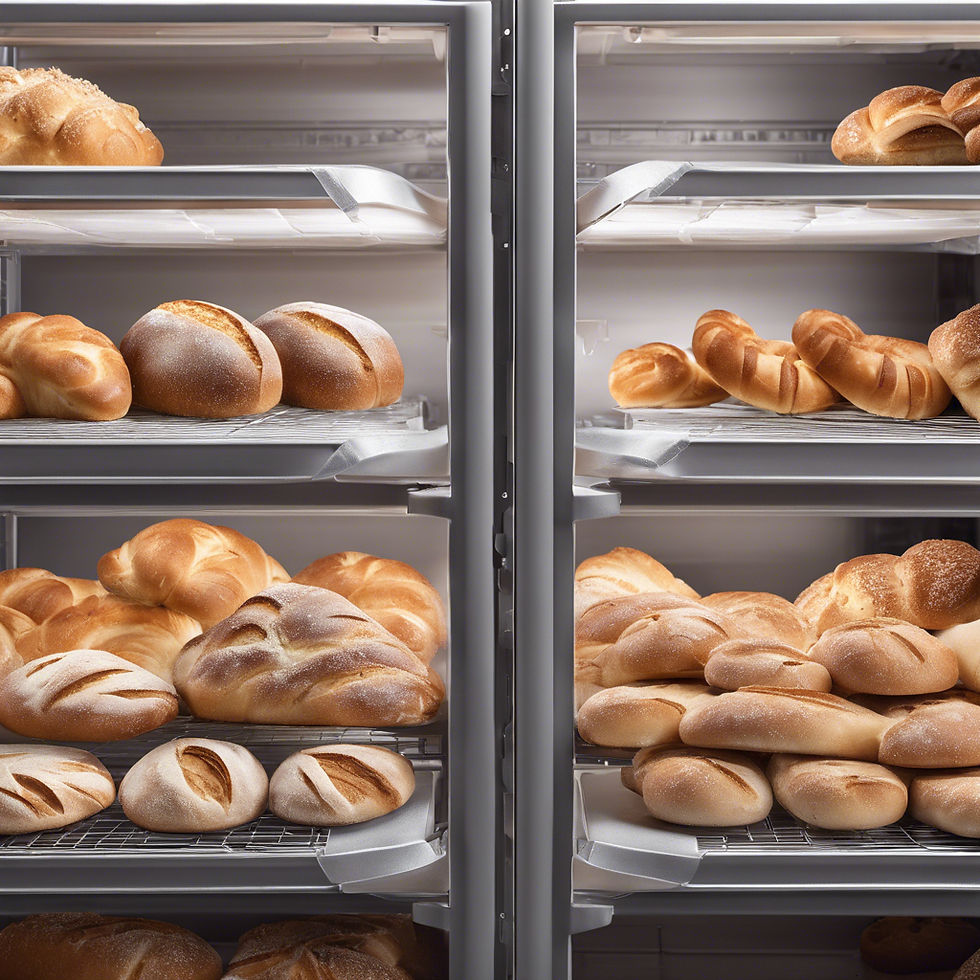
Commercial Bread Proofer: Purpose, Controls, and Production Role
A commercial bread proofer box, also called a bakery bread proofer box or electric bread proofer box, is a temperature- and humidity-controlled cabinet used to optimize dough fermentation.
Unlike ambient room proofing, which is inconsistent and climate-dependent, a commercial proofer offers precision control over yeast activity, key for achieving volume, softness, and structure in every batch.
Commercial Bread Proofer: Common Cabinet and Trolley Configurations
Single door / double door vertical models
Trolley-style for 32–64 trays
Electric steam or digital control models
Pro Tip: When choosing between vertical and trolley-style, consider your batch size and available space. Trolley models pair well with rack ovens for continuous production flow.
Commercial Bread Proofer: Temperature, Humidity, Capacity, and Utilities
Commercial Bread Proofer: Temperature Control and Dough Readiness
Temperature control: Treat the manufacturer’s range as equipment capability, not a universal recipe. Establish starting settings from dough type and dough temperature, then judge readiness by the approved product standard.
Commercial Bread Proofer: Humidity Control and Surface Condition
Humidity control: Use humidity as a starting adjustment to prevent skinning without creating excessive condensation. Refine the setting for the dough, loading pattern, climate, and proof time.
Commercial Bread Proofer: Tray Capacity and Rack Compatibility
Tray and rack fit: Verify usable internal dimensions, tray or rack format, spacing, load weight, door clearance, and airflow with your actual production hardware.
Commercial Bread Proofer: Electrical Service and Operating Cost
Utilities: Match the exact model’s nameplate voltage, phase, frequency, connected load, water or drain needs, and plug or hardwire requirements to the installation site.
Commercial Bread Proofer: Define Production Needs
User-friendly controls, waterproof switches, and quick-access doors save time. Models with programmable memory reduce manual input.
Pro Tip: If your bakery runs in a humid environment, look for anti-condensation glass and corrosion-resistant materials.
Commercial Bread Proofer: Sizing, Layout, Workflow, and Growth
Commercial Bread Proofer: Evaluate Layout and Rack Flow
Small bakery: A compact 16- or 32-tray unit may be sufficient.
High-volume bakery: Consider a 64-tray trolley proofer integrated with rotary ovens.
Commercial Bread Proofer: Plan for Future Capacity
Measure door widths and working space.
Decide whether to use standalone or built-in units.
Commercial Bread Proofer: Confirm Safety and Local Compliance
Refrigerated dough proofer
Commercial Bread Proofer: Setup and Operation
Compliance: Request model-specific documentation required by the destination market and have the electrical and foodservice installation reviewed against current local rules.
Takeaways:
Align proofer size with daily flour usage and batch size.
Don’t underestimate the impact of electrical specs and insulation quality.
Commercial Bread Proofer: Product Quality and Workflow Benefits
Upgrading from ambient proofing to a dedicated commercial bread proofer box brings numerous production and product-quality benefits:
Predictable scheduling: Controlled conditions can reduce variation, but proof time still depends on dough formula, dough temperature, piece size, loading, and the target product.
Product quality: Stable, recipe-appropriate conditions can support repeatable volume, crumb, and oven spring when mixing, dividing, makeup, and baking are also controlled.
Waste control: Clear readiness standards and batch records can reduce avoidable proofing errors; they do not eliminate variation elsewhere in the process.
Workflow Synchronization: Timed proofing allows you to align batches precisely with oven cycles and mixer output.
Labor planning: Programmable controls can simplify repeat settings, but trained operators must still inspect dough condition and respond to production changes.
Line balance: Compare mixer, divider, makeup, proofer, and oven cycle capacity so racks do not queue or starve the next process.
Commercial Bread Proofer: Setup, Monitoring, Sanitation, and Records
Using a bread proofer box efficiently means going beyond just switching it on, success depends on setup, timing, and monitoring.
Commercial Bread Proofer: Optimization and Recordkeeping
Preconditioning: Allow the cabinet to stabilize according to the equipment manual and confirm the displayed condition before loading.
Set target conditions: Begin with recipe- and supplier-approved settings, then adjust using actual dough temperature, surface condition, and readiness rather than one universal range.
Space Dough Evenly: Leave airflow space between trays to ensure uniform fermentation.
Use Consistent Batch Sizes: Different dough weights can lead to uneven rise rates.
Time by readiness: Record the starting dough condition and inspect the product against the bakery’s approved readiness standard; clock time alone is not sufficient.
Commercial Bread Proofer: Sourcing and Supplier Checks
Cover Dough When Needed: For long proofing periods, especially in drier climates.
Loading and rotation: Maintain airflow clearances and rotate only when the equipment design and validated procedure require it.
Record Batch Data: Note proofing times by recipe for better planning and staff training.
Readiness check: Use the bakery’s approved product-specific method. A poke response can be one signal, but enriched, high-hydration, laminated, frozen, and sourdough products may require different criteria.
Commercial Bread Proofer: Supplier Comparison and Quotation Scope
Commercial Bread Proofer: Marketplace and Trade-Show Sourcing Checks
1. Alibaba & Online B2B Platforms
Broad product listings, but inconsistent support
Beware of non-factory sellers posing as manufacturers
2. Direct from Guangzhou China Bakery Equipment Exporters
Like Yuemen Baking Equipment, these suppliers offer:
Factory-direct pricing
Customised proofers for your tray size
Verified export documentation
3. Search: "commercial Bread Proofer Box Supplier China"
Use search results only to create a supplier shortlist. Verify legal company identity, factory capability, service coverage, references, and quotation scope independently.
Request model-specific certificates, test reports, manuals, wiring information, and labels applicable to the destination market; do not rely on a logo alone.
4. Industry Fairs (E.g. China Bakery Exhibition)
Meet manufacturers directly, view sample units, and compare designs
Pro Tip: Always request interior photos and confirm electrical specs before placing international orders.
Commercial Bread Proofer: Evidence, Service, and Support Checks
Evaluate Yuemen and alternative suppliers using the same evidence: model data sheet, capacity test, utilities, materials, control logic, spare-parts list, warranty, lead time, and after-sales process.
Documentation should be confirmed for the quoted model and destination market before purchase.
Capacity should be verified with the exact tray or rack format, spacing, and loading plan.
Matched with rotary ovens and bread slicers
Built with stainless steel and digital controls
Request a written scope that separates equipment, layout support, commissioning, training, spare parts, freight, and post-sale service.
Need help picking the right size or layout? We’ll guide you based on your output, space, and budget.
Contact Us:
WhatsApp/WeChat: +86 188 1945 9649
Quotation checklist: product mix, batch size, tray or rack dimensions, target schedule, utilities, room conditions, delivery country, and required documentation.
Commercial Bread Proofer: Final Buying and Operating Checklist
Choosing the right commercial bread proofer box directly impacts your dough quality, production timing, and customer satisfaction.
By understanding bread proofer box features, matching specs to your bakery setup, and following best practices for usage and maintenance, you set your business up for consistent success.
How to make a proofing box for bread
👉 Still comparing options? Message us for a free catalogue and technical guidance.


