top of page
Bread production plant

Our Baking Products

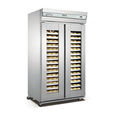
Double Door Bakery Spray Proofer 32 Trays High Humidity

Model:

YMP-32PS

POWER

1.8KW

220V

VOLTAGE

138 KG

N.Weight

1280–1920 Pieces/Day

Capacity

Electric

Energy

YMP-32PS

Power source

Electric

Shipping Port

Weight

Material

Stainless Steel

1100*880*2000 MM

Functions

Size

Capacity

Certifications

CE/SABS/GSO/ISO

Made in China

Place of Production

Price

Guangzhou China

138 KG

Time Range: 0~99min

1280–1920 Pieces/Day

$600-$18,000

Specification

What a 32-Tray Double-Door Spray Proofer Is Really Buying You

The YMP-32PS is a standard same-day spray proofer built for bakeries that need both proofing capacity and smoother tray movement. It should not be treated as a retarder proofer. Its job is not overnight dough scheduling. Its job is to give shaped dough a stable warm and humid environment before baking while making it easier for staff to load and unload larger tray batches through a two-door layout.

That distinction matters because many buyers see a 32-tray cabinet and immediately compare it with refrigerated retarder proofers. The YMP-32PS solves a different bakery problem. It is for bakeries whose dough is already being produced in the same shift and whose next bottleneck is final-proof control, staff movement, and cleaner handoff into the oven. If the real pain point is delayed fermentation or opening-time release, a refrigerated retarder proofer is the better category. If the pain point is same-day batch handling and proof consistency, this model makes much more sense.

What the double-door layout changes

Compared with a single-door 32-tray shelf proofer, the YMP-32PS is more attractive when the bakery wants a clearer load side and unload side, or simply wants better access to a larger cabinet during busy periods. In a bread room or bun line, that can help reduce crossing paths between shaping and baking teams. The cabinet is still shelf-loaded, so it does not require full trolley circulation like a rack-based model, but it offers more access flexibility than a one-door unit.

Best-fit production role

This model fits medium-volume bread rooms, bakery back kitchens, supermarket bakery sections, and growth-stage bakeries that need stronger same-day proofing discipline. It sits after dough shaping, panning, or tray loading and before the bake stage. It is especially useful where the oven side is ready for larger batches but the proofing stage still needs a more stable and more organized release pattern.

Nearby model comparison inside the proofer family

Compared with the YMP-16FP, this model is for bakeries whose tray volume has clearly moved beyond compact proofing rhythm. Compared with the YMP-32PD single-door version, it gives better access and can support cleaner staff flow in tighter production windows. Compared with the YMX-32PT trolley model, it keeps a simpler shelf-style loading method and asks for less rolling-rack space. So the main comparison is not only 32 trays versus 32 trays. It is single-door versus double-door versus trolley handling.

Cross-category comparison that actually matters

Against open-rack or room proofing, the YMP-32PS gives more consistent final proof and less dependence on ambient conditions. Against a refrigerated retarder proofer, however, it solves a different problem. It improves same-day proofing flow; it does not create overnight dough scheduling. Buyers should choose this model when they need better final-proof discipline and smoother tray movement, not when they need chilled timing control across shifts.

Suitability boundary

This machine is strongest for bakeries already running meaningful same-day tray volume with a more structured line. It is usually unnecessary for very small shops with low batch count, and it is not the right answer when the next bottleneck is delayed fermentation planning rather than final-proof access and proof-stage capacity.

Description

More Information

How to Decide Whether the YMP-32PS Fits Your Bakery

The smartest reason to buy this model is that the bakery needs more same-day proofing capacity and more convenient access, but does not want to step into trolley workflow or refrigerated scheduling. That puts the YMP-32PS in a very specific middle position: bigger and more accessible than a compact cabinet, but simpler than a trolley or retarder system.

Scenario comparison

For a small independent bakery or café bakery, the 16-tray model is often enough because batch release is smaller and floor space matters more than access speed. For a growth-stage bread room, supermarket bakery section, or a bakery with clearer separation between shaping and oven loading, the double-door 32-tray format becomes more useful because staff can work around the cabinet more efficiently. For bakeries already using rolling racks or wanting to reduce shelf-by-shelf transfer, the trolley model may be the better next step.

Workflow, staffing, and prep logic

  • Workflow: shape dough, load trays into the cabinet, complete final proof, then unload toward deck, rotary, or convection baking.
  • Staffing: the two-door layout can help reduce congestion when more than one operator is involved in proof-stage handling.
  • Prep rhythm: it works best when dough is already prepared in organized tray groups and the bakery wants cleaner release into the bake stage.
  • Output rhythm: the oven side must be able to absorb larger proofed batches, otherwise extra proofing access does not create real output gain.

Nearby model and parameter comparison

Choose this model over the single-door 32-tray version when access convenience and staff flow matter enough to justify the wider cabinet logic. Choose the single-door version when one-side loading is simpler and space is tighter. Choose the trolley model when rolling-rack movement is the real next step. Choose a refrigerated retarder proofer only when the bakery needs overnight dough timing rather than better same-day proof access.

Product-line pairing recommendation

This proofer pairs well with a spiral mixer, divider or rounder, moulder, tray staging bench, and either a deck oven or rotary oven. It also suits bread and bun lines where the bakery wants cleaner handoff between shaping and baking without moving into a full rack-based system.

Installation and planning checks

Before ordering, confirm door opening clearance, aisle width, tray size compatibility, and whether the cabinet can sit between shaping and oven zones without creating crossing traffic. Also check whether the bakery actually benefits from double-door access or is simply attracted to larger equipment. Better access creates value only when the surrounding workflow can use it.

FAQ-style buyer clarification

  • Is this better than a single-door 32-tray proofer? It can be, when staff movement and access speed matter more than simpler one-side loading.
  • Is it better than room proofing? Yes, when the bakery needs more repeatable final proof and less weather dependence.
  • Does it replace a retarder proofer? No. It supports same-day final proof, not overnight dough scheduling.
  • Who is it best for? Medium-volume bakeries that need stronger same-day proofing flow and cleaner tray access.
  • Who should avoid it? Very small shops, or buyers whose real need is chilled retard rather than same-day proof handling.
  • What is the most common buying mistake? Choosing double-door access when the bakery has no real staff-flow bottleneck and actually needs either a simpler cabinet or a different machine category.
组 35_3x.png
Hsy18819459649
+86 188 1945 9649
+86 188 1945 9649
bottom of page