top of page
Bread production plant

Our Baking Products

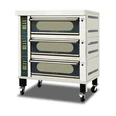
Commercial Bread Baking Oven Electric Type 1 Deck 2 Trays

Model:

E-1D2T

POWER

6.6KW

220V/380V

VOLTAGE

86 KG

N.Weight

400–600 Items/Day

Capacity

Electric

Energy

E-1D2T

Power source

Electric

Shipping Port

Weight

Material

Stainless Steel

1310*880*525 MM

Functions

Size

Capacity

Certifications

CE/SABS/GSO/ISO

Made in China

Place of Production

Price

Guangzhou China

86 KG

2 Trays/Deck

400–600 Items/Day

$600-$18,000

Specification

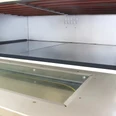
1 deck 2 tray electric deck oven for compact bakeries that need more batch room without giving up a simple one-chamber workflow


The YMC-20DI is the practical step up from entry-level deck baking. With a 1310 × 880 × 525 mm body, 6.6KW power, 220V or 380V options, and a stated 400–600 items/day range, it is designed for buyers who already know that one tray is restrictive but who still do not need the installation scale of a multi-deck oven. That makes it a disciplined choice for bakery cafés, hotel pastry rooms, compact bread shops, dessert counters, and startup bakeries that want more usable oven area without turning the project into a full production-line investment.


The real value of this format is not just two trays. It is the ability to increase per-cycle output while keeping the operating logic simple. One chamber means one loading rhythm, one temperature zone, and easier staff training. That is useful when the menu is still narrow enough to run on one baking schedule, but the business no longer wants to wait for repeated single-tray cycles. In this sense, the YMC-20DI is often the right choice when baking area is the problem, not chamber separation.


This model is strongest for buns, cookies, small bread runs, filled pastries, snack items, and daily refill baking where deck-style top-and-bottom heat still matters. Compared with a compact convection oven, it suits buyers who care more about chamber feel, base colour, and direct manual adjustment than about fan-driven tray convenience. Compared with the 1 deck 1 tray version, it gives noticeably more breathing room for service. Compared with the 2 deck 4 tray model, it stays more compact and less complex, which is often exactly what smaller operations need.


Where this 2 tray single-deck model fits best


  • Compact bakery shops that have moved beyond trial-scale output.
    This is a good fit when one tray slows service, but the menu still runs on one chamber schedule most of the day.

  • Bakery cafés and hotel pastry sections.
    It suits operations that need fresh-bake turnover and visible oven work without dedicating space to a taller multi-deck body.

  • Support-oven use inside a broader line.
    A larger bakery can use this size for one stable product lane, finishing work, or overflow instead of forcing everything into the main oven.


Why buyers still compare it carefully before ordering


The boundary of this model becomes clear when the menu starts overlapping. If bread, pastry, and snack items regularly need different timing or temperature windows, the correct upgrade is usually a 2 deck oven rather than a larger single chamber. If the operation is already forecasting constant pressure on both tray positions, buying the 1 deck 2 tray size can delay rather than solve the next capacity decision. And if the menu is mostly light pastry or snack baking, a convection oven may still be more efficient. The best buyers for this model are the ones who want more room per bake cycle but still value a compact, easy-to-manage deck station.

Description

More Information

How a 1 deck 2 tray oven fits real daily workflow


In practice, this model works best in a compact line built around short and frequent bakes. A typical setup may include a small spiral or planetary mixer, a prep bench, proofing support if dough products are involved, this deck oven, then cooling or display space nearby. In that workflow, the oven becomes a dependable daily station for replenishment baking, café refill work, or one focused product group. It is large enough to matter, but still simple enough that one operator can manage it without the coordination demands of multiple active decks.


Nearby model comparison: one tray, two trays, or two decks?


  1. Choose the 1 deck 1 tray model when space is extremely tight and daily demand is still modest.
    That model stays at 3KW with a smaller 990 × 650 × 435 mm footprint and around 200 items/day, so it is better for testing, demos, or very light fresh-bake programs.

  2. Choose this 1 deck 2 tray model when the real problem is per-cycle baking area.
    At 6.6KW and 400–600 items/day, it gives a meaningful step up while keeping the workflow disciplined and compact.

  3. Choose the 2 deck 4 tray model when the menu now needs parallel baking zones.
    That step moves to 13.2KW, 380V, a larger 1320 × 1080 × 1365 mm body, and two chambers, which is more useful when different products must run at the same time.


Cross-category comparison: deck oven vs convection oven


Choose this deck oven instead of compact convection when crust development, stronger base colour, and direct chamber response matter more than fan circulation and tray convenience. Choose convection instead when the menu is heavily weighted toward pastries, cookies, snacks, or other lighter tray-baked products where quick repetitive loading matters more than deck-bake feel. For many buyers, this comparison is more important than the size comparison, because it decides whether a deck oven is the right oven family in the first place.


Scenario comparison: startup main oven or support oven?


  • Startup bakery or café: this can be a realistic main oven if the menu is still controlled and the service rhythm is not highly overlapping.

  • Growing retail bakery: it is more often a transitional main oven before the business needs separate chambers.

  • Larger bakery or hotel kitchen: it often makes more sense as a support oven for one product family, overflow, or finishing work.


Useful pairing logic for this size


  • Small mixer plus compact proofer: a practical pairing for buns, bread rolls, and light dough work.

  • Cooling rack and display area: important when short-batch freshness is part of the selling format.

  • Convection support oven: useful when the deck oven handles crust-sensitive items and convection covers pastry or snack backup work.


FAQ-style buying clarification


  • Who should buy this model?
    Buyers who need more than a one-tray oven but still run a controlled single-chamber workflow.

  • Who should not buy it?
    Operations that already know they need bread, pastry, and snack products baking in parallel should step directly to a multi-deck format.

  • When is the 2 deck 4 tray model a better choice?
    When the pressure comes from overlapping bake schedules rather than from limited tray area in one chamber.

  • What is the most common sizing mistake?
    Buying a bigger single chamber when the real problem is actually chamber separation.

  • What should be checked before ordering?
    Confirm whether the site will run 220V or 380V, review peak trays per hour instead of only daily totals, and make sure there is enough prep, loading, and cooling space around the oven.

组 35_3x.png
Hsy18819459649
+86 188 1945 9649
+86 188 1945 9649
bottom of page